A short drama about Skye, a transgender woman who goes back to her father’s farm to bury her beloved pet — inadvertently reenacting what should have been her mother’s funeral.
Synopsis
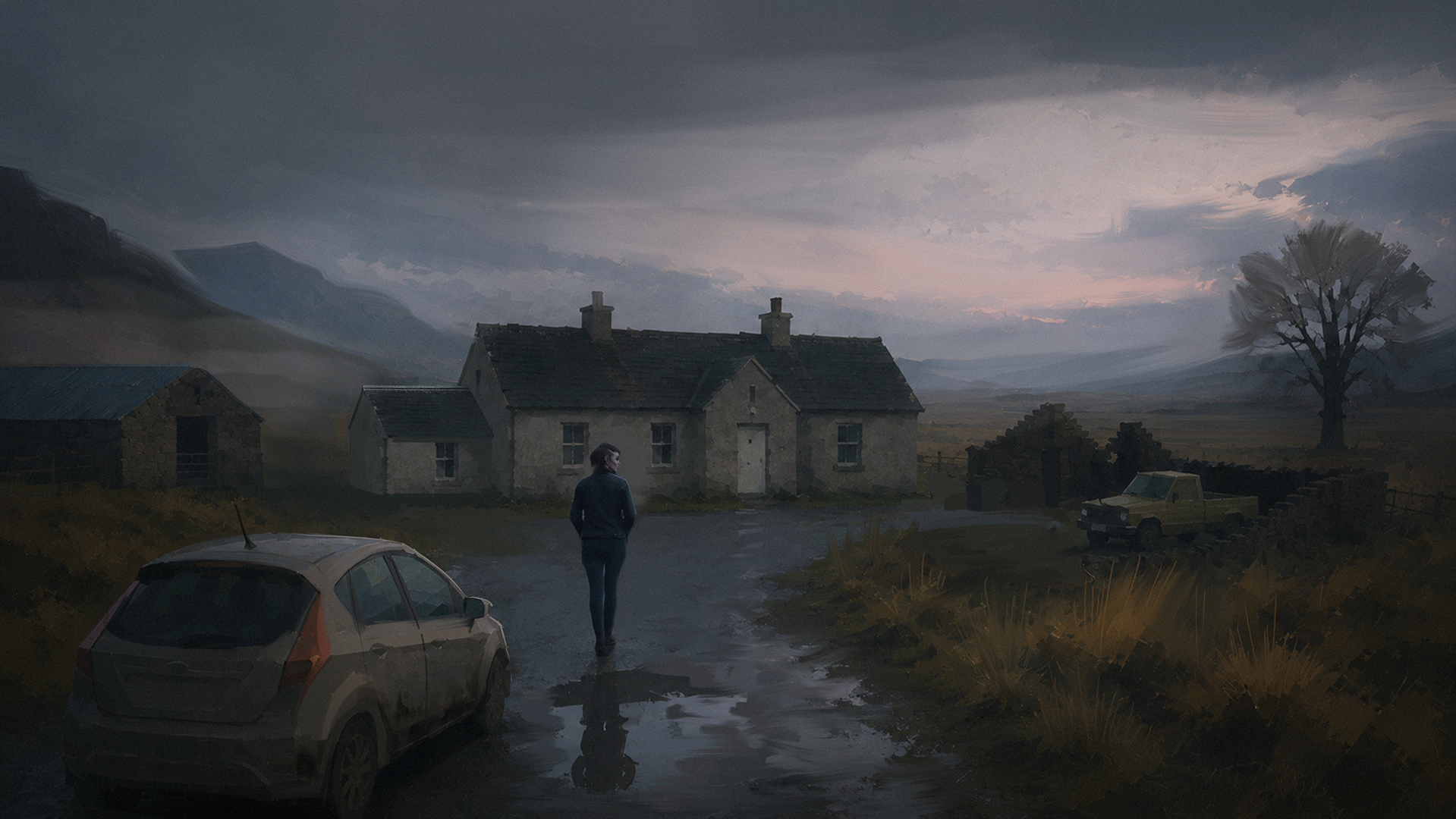
SKYE, a young trans woman, receives a voicemail from her father, FERGUS. Her dog, ARCHIE, died. Skye drives overnight from the city to her childhood home in rural Scotland to be there for the burial.
Father and daughter work side by side digging the grave, the loss of Archie stirring up old grief. As Fergus turns to leave, Skye finds the courage to confront him, voicing her deepest fear: that he excluded her from her mother’s funeral because he never truly accepted her for who she is.
Faced with the pain his actions caused, Fergus finally opens up. He admits he was too broken by his own grief to comfort her, and didn’t want her to see him struggling.
For the first time, Fergus tells Skye: You’re my daughter. I love you. They begin to grieve together.
Mar Sin Leat covers grief on so many levels, the grief of a husband, the grief of a child, the loss of identity and transition of a child. How do we grieve as a child, an adult and how different that is for everyone?
Can the death of a beloved pet trigger feelings buried deep inside? This is more common than you would believe.

Why this short Matters


Mar Sin Leat is a film about vulnerability, dialogue and empathy — emerging amid deepening social polarisation.
It features a trans woman whose story is shaped not by transition but by family, loss and the need for connection, resisting the abstraction through which trans lives are often politicised. Following the Secretary of State’s veto of the Scottish Gender Recognition Reform Bill and the wider weaponisation of trans people in contemporary culture wars, Mar Sin Leat offers an opportunity for Scottish cinema to actively support trans people through representation that is humane, grounded and rooted in lived experience.
The film also questions unhealthy gender bias, particularly the expectations placed on men and women when it comes to expressing emotion. Fergus embodies a form of masculinity shaped by silent endurance, revealing how rigid gender norms can inhibit emotional honesty, even in moments of profound loss.
At its core, Mar Sin Leat explores the importance of processing grief rather than repressing it. To ensure this portrayal was handled sensitively, we partnered with At A Loss and Cruse Bereavement Care Scotland — charities we support — speaking with people who had been kept from a parent’s funeral, as well as those who made the difficult decision to keep their children away from the funeral of the other parent. We were struck by how common this experience is, often driven by society’s discomfort with death, particularly where children are concerned. This research revealed how unresolved grief can shape entire family dynamics, and how differently people experience and express loss. One of the clearest findings was how difficult it can be simply to find the words to convey it. So long as these conversations remain taboo, processing loss — and moving forward from it — will remain a monumental task.
Healing can only begin once silence is broken.
Mar Sin Leat is set to tackle the topic of grief head on in creative ways. The film addresses the raw grief of those of us left behind, related to complex feelings and emotions tied up with relationships before the death occurred.
As with any of us dealing with the loss of someone close, the emotions take the heroine, Skye by surprise. Others of us, like Skye, will find ourselves grappling with unexpressed or associated grief from long ago that emerges as we face a current bereavement.